Most AI coding tools ask you to wait. You describe a change, send it off and watch a spinner while your train of thought quietly leaves the station. GPT-5.3-Codex-Spark is OpenAI's attempt to kill that pause. It is built to answer so quickly that a coding session feels like talking to a colleague rather than filing a ticket.
That idea is genuinely good. The package around it is a different matter. Spark is locked to the priciest ChatGPT plan, it is still labelled a research preview, and it is deliberately a smaller, less capable model than the main Codex line. So the real question isn't whether it's fast. It's whether speed alone justifies the price of entry.
Spark at a Glance
| Product | GPT-5.3-Codex-Spark |
|---|---|
| Made by | OpenAI |
| Status | Research preview in 2026 |
| Built for | Near-instant, real-time coding iteration inside Codex |
| Model type | Smaller, faster coding model |
| Input and context | Text only, 128k context window |
| Where it runs | Codex app, Codex CLI and the Codex VS Code extension, for ChatGPT Pro users |
| API | No general access at launch; a limited group of design partners was announced |
| ChatGPT Plus | Spark is not listed for Plus |
| Price of entry | ChatGPT Pro, starting at $100 a month, with a higher tier above it |
| Usage limits | Separate Spark limits that can change; heavy demand can cause queues |
| Icon Polls rating | 3.0 out of 5 |
The Pitch: Never Wait on Your Assistant
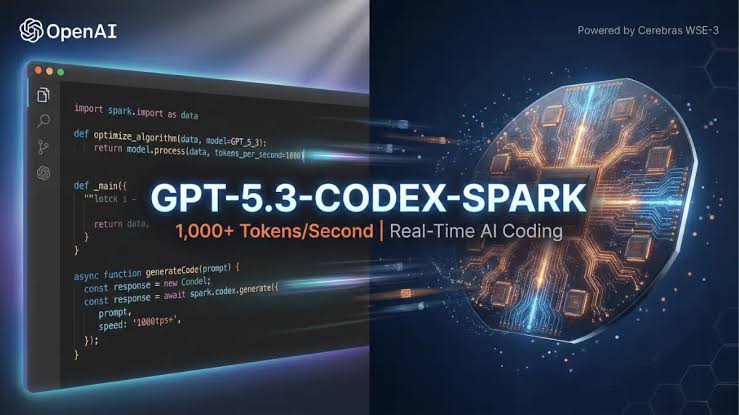
Spark is designed for the developer who wants to stay in the driver's seat. Make a small change, see the reply almost immediately, nudge the direction, keep going. It is meant to be interrupted and redirected without the exchange feeling sluggish, and that changes the texture of the work more than any single feature does.
In judging it, we weighted what a user can reliably do over headline speed claims. Access, price, workflow fit, integrations and practical limits all matter more than a stopwatch figure, especially for a model that openly promises to do one narrow thing well.
Where a Small Model Earns Its Keep
Spark's default style is light and targeted. It suits jobs like these:
- Small edits and reshaping a single function
- Refining an interface component
- Chasing down a narrow, well-understood bug
- Getting a quick explanation of an unfamiliar file
It also makes minimal edits by default and won't run tests unless you ask. Some will find that restrained; we think it's the right call for a model you're steering in real time on a live codebase. OpenAI positions Spark as a fast companion, not a replacement for deeper coding agents, and that honesty is useful. If you already know your project and just want to move faster through it, the pace is a real advantage.
The $100 Question
This is where the score drops. ChatGPT Plus costs $20 a month and includes Codex, but Spark isn't part of it. You need ChatGPT Pro, which starts at $100 a month, with a $200 tier offering a bigger allowance. That's a steep climb for someone who only codes a few focused sessions a week.
For a professional whose billable hours depend on quick iteration, the maths can work. For students, hobbyists or teams that mostly need dependable general coding help, it's a hard sell. Spark having its own quota is nice in theory, but it doesn't answer the bigger doubt: is a preview-only speed model worth a subscription on its own? For most people, probably not yet.
About That API
Don't sign up expecting to call Spark from your own apps. At launch, OpenAI opened it only to a small set of API design partners, and public pricing marks it as a research preview rather than listing standard token rates. Treat it as a Codex subscription feature, full stop.
That matters for automation, CI pipelines and third-party agent tools. If your project needs a stable model with documented token pricing, pick a generally available API model. Spark may open up later, but a fair review judges what users can count on today.
Inside VS Code, GitHub and OpenClaw
The VS Code extension is Spark's most natural home. Reading a file, making a tight edit and checking the result is exactly the loop fast replies improve. It's far less convincing when a task needs broad planning across a repository, heavy tool use or careful review of many files.
GitHub support belongs to Codex, not to Spark specifically. Choosing Spark won't make every repository action faster, deeper or safer, so keep reviewing diffs and tests yourself. OpenClaw is murkier still: because Spark isn't a normal public API key route, any setup depends on whether your account and connector expose the Codex subscription models. That's possible compatibility, not guaranteed native support.
Benchmarks Versus Your Repository
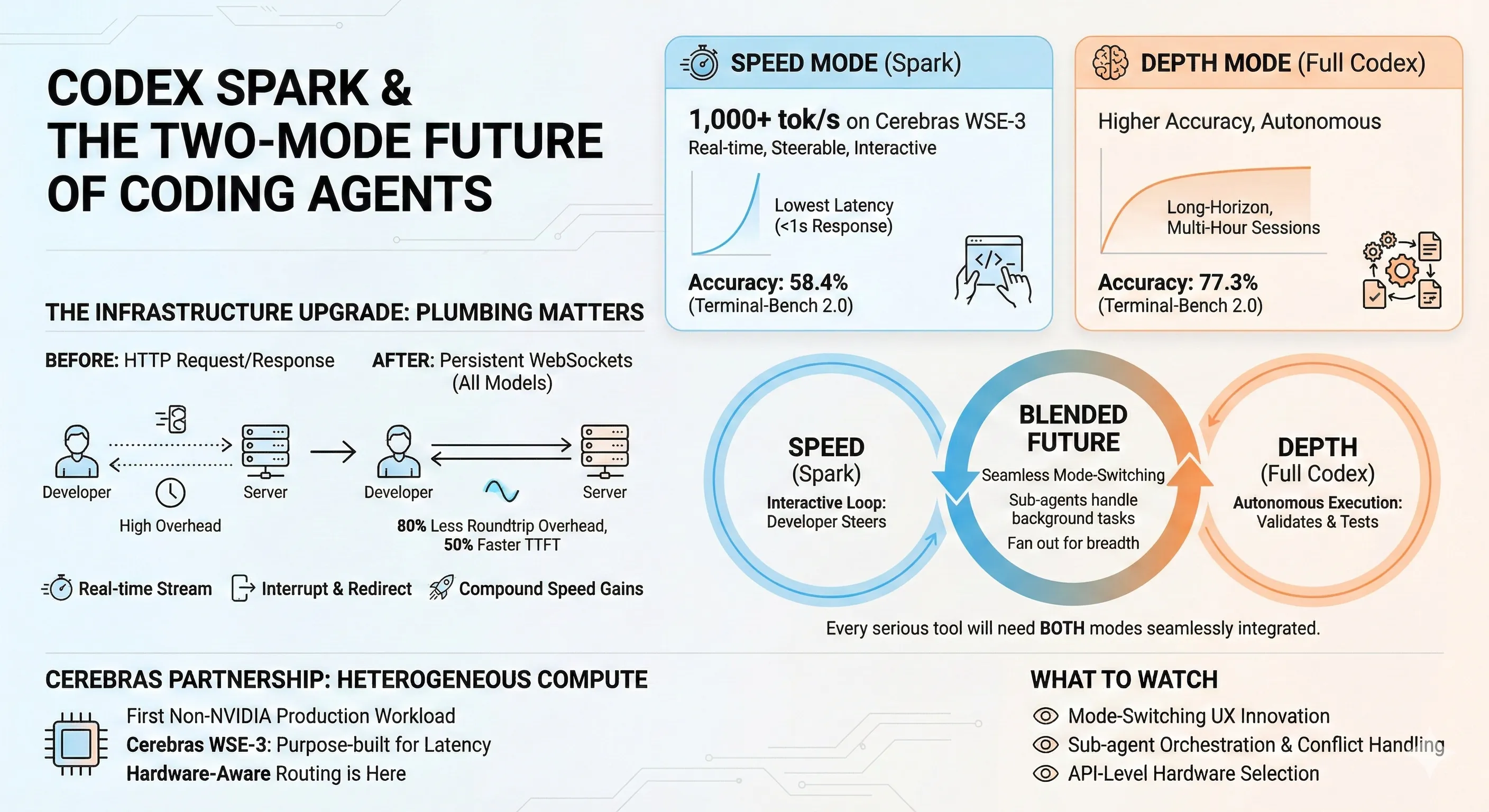
OpenAI reports strong results on SWE-Bench Pro and Terminal-Bench 2.0, with tasks finished in a fraction of the time GPT-5.3-Codex takes. Those numbers help explain why short coding loops feel so impressive. They are not a promise that your real-world change will be correct, secure or ready to merge.
The trade-off is built into the design. Spark chases speed and gives up some capability to get it. Use it to keep momentum on clearly defined work, then hand off to a stronger model when the job involves architecture, tricky reasoning, long context or risky changes.
Queues, Quotas and a Confusing Name
The frustrations are practical. Spark's limits are separate and adjustable, and during busy periods access can be reduced or queued, which is an awkward irony for a model sold on never making you wait. There's also a naming problem. Hear "Codex" and you might expect OpenAI's most capable coding agent. Spark is intentionally the smaller, quicker sibling, and it works best when you go in knowing that.
The 3.0 Verdict
Icon Polls rates GPT-5.3-Codex-Spark 3.0 out of 5. The core idea is strong and the speed genuinely improves live coding. But it's Pro-only, text-only, still in preview and not a broadly available API model. For the right Pro subscriber, it's an excellent second tool. For everyone else, it's a promising glimpse rather than a clear purchase. Want more of our takes on tech and culture? Browse the latest Icon Polls features and tell us what you think.
Three Things People Ask
Can I get Spark on ChatGPT Plus?
No. Plus includes Codex, but Spark is listed as a research preview for ChatGPT Pro users only.
Is Spark better than GPT-5.3-Codex?
It's faster, not smarter. Spark is deliberately less capable, so it shines on quick, well-scoped tasks while the stronger model is safer for complex or long-running work.
What's the context window?
At launch, Spark offers a 128k context window and accepts text only.