Every AI lab now claims its model is the best at writing code. The claims arrive with charts, carefully chosen demos and benchmark numbers that are hard to check. Code Arena takes a blunter approach: put two models on the same task, show people both results, and let them pick the one that actually works better. Repeat that enough times and you get a leaderboard.
That idea is simple, and it's why Code Arena has become one of the more useful stops for developers choosing a coding model in 2026. It isn't the final word, and it doesn't pretend to be. But as a first filter, it beats reading press releases.
The Short Version
| Platform | Code Arena, from Arena.ai |
|---|---|
| What it is | A comparison tool and leaderboard for AI coding models |
| How it works | Users test models on the same task and vote on the stronger output |
| Main categories | Web development, image-to-web development and agentic coding workflows |
| Leaderboard data | Scores, vote counts and rank spread, plus provider, pricing, context window and licence details where available |
| Cost | The comparison experience is publicly accessible; costs for individual models vary |
| Privacy | Keep sensitive code and personal information out of it |
| Our rating | 4.1 out of 5 |
Two Outputs, One Vote
The core loop is side-by-side testing. You give a coding or web development task, two leading models respond, and you judge which answer is stronger. Those preference votes feed the rankings.
What makes this more useful than a static benchmark page is that you see the work. You can tell whether a model produced something you could build on, whether its structure makes sense, and how much cleanup you'd face afterwards. Code that compiles is the floor, not the goal. Developers care about clarity, design choices and repair time, and a direct comparison surfaces those things fast.
The split into categories matters too. WebDev and Image-to-WebDev sit apart from general chat performance, so if your interest is building interfaces, you're not reading rankings shaped by essay writing or trivia.
Reading the Board Without Fooling Yourself
The leaderboard is a public signal. Treat it as one.
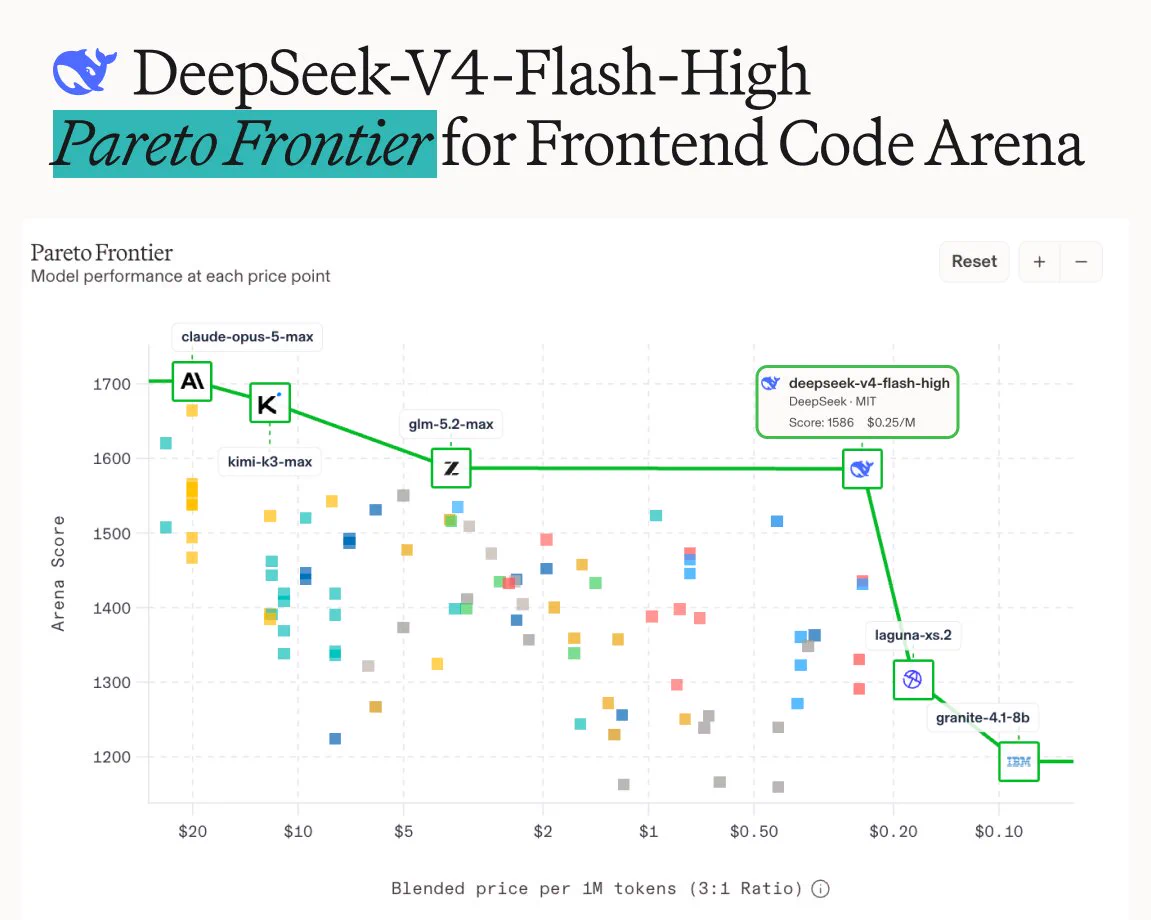
A narrow gap between two scores usually means the order could flip. A model with fewer votes, or one marked preliminary, sits on shakier ground than its position suggests. The rank spread figure exists precisely to show that uncertainty, and it's the column most people skip.
The sensible workflow looks like this:
- Pull a shortlist of three or four models from the relevant category.
- Check price and context window against what your project actually needs.
- Test each one on real, non-sensitive work: a small frontend component, a bug from a sample project, a typical feature request.
- Pick based on those results, not on who sits at number one this week.
A lower-ranked model can easily be the better value. The site shows the data to work that out, but it leaves the reasoning to you.
What a Head-to-Head Can't Prove
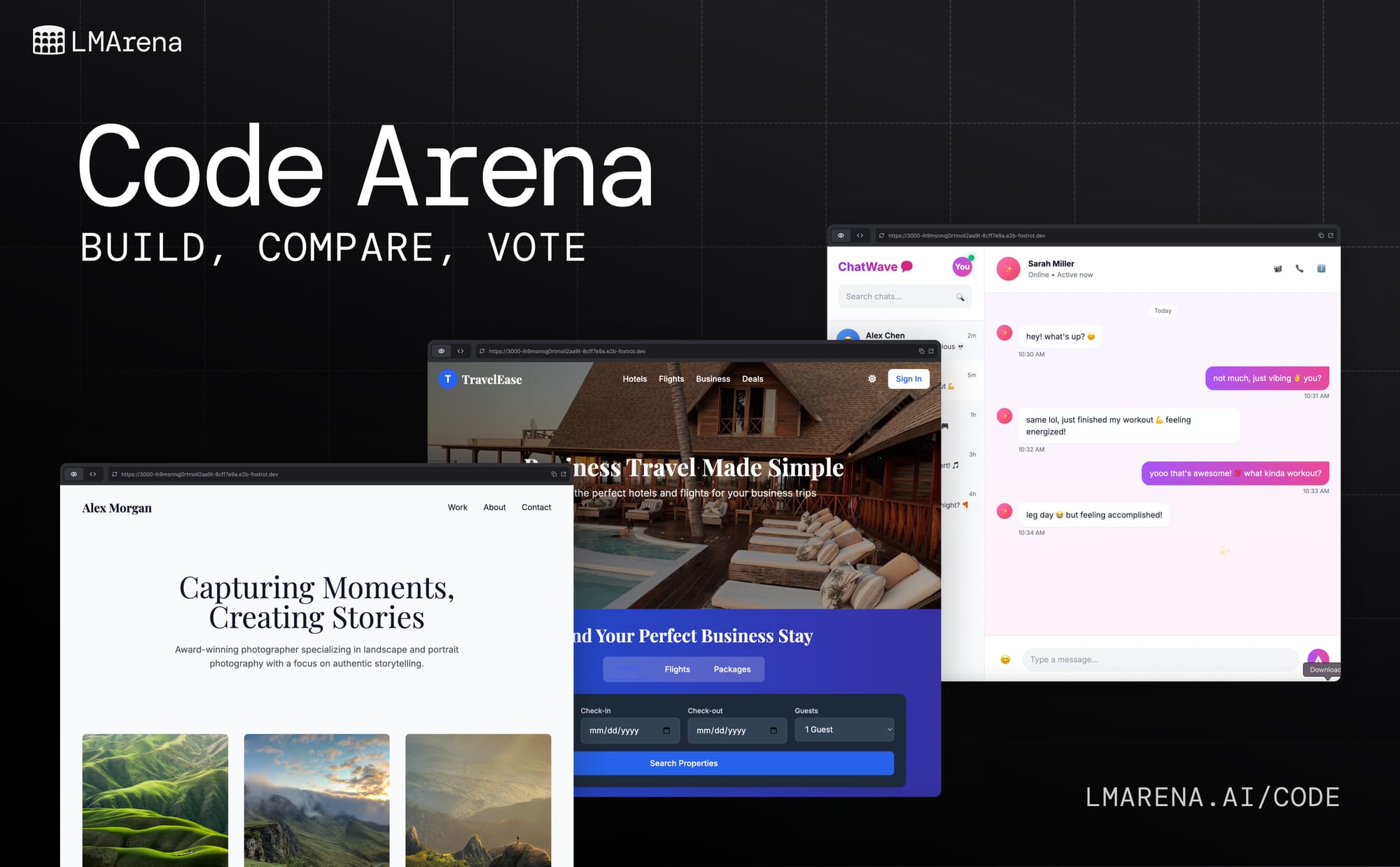
Code Arena is strongest where results are visible. When the task is turning a prompt or a screenshot into a working-looking interface, human preference is a pretty good judge. People can see which layout is cleaner and which one actually does what was asked.
It's weaker on things you can't see in a single battle. A winning answer tells you nothing about whether the model will safely resolve issues in a large repository, write secure production code or follow your team's internal conventions. A model can dazzle in a comparison and still need careful review once it's loose in a real codebase. Screening tool, yes. Replacement for testing and code review, no.
Swafe, IIM and "Fronted": Sorting Out the Searches
A lot of people look up Code Arena alongside a few puzzling terms, so here's what we can say.
- Swafe isn't an official Code Arena feature. In most cases it looks like a misspelling of SWE-bench, a separate coding evaluation built around resolving defined software issues.
- IIM isn't a clearly defined Code Arena feature either. It's likely a search variation or a mix-up with another AI term, so check the exact name you're after.
- Fronted almost always means frontend, which Code Arena covers through its web development and image-to-web categories.
The SWE-bench confusion is the one that matters. Code Arena measures which output people prefer in a direct battle. SWE-bench-style testing asks whether a model can fix a specified problem. Both are useful. They are not the same number, and quoting one as if it were the other leads to bad decisions.
The Interface Gets Out of the Way
The frontend of the site itself is one of its best qualities. The comparison view is direct, and the leaderboard filters without turning into a research dashboard. A solo developer can make sense of it in minutes, while teams still get the detail they want: score ranges, vote counts, pricing, context information and licensing labels.
Where it falls short is guidance. Newcomers won't necessarily grasp why category winners differ, what a preliminary label really implies, or how to weigh rank against cost and latency. A bit more in-product explanation would turn a good tool into a genuinely friendly one.
Who Gets the Most Out of It
Developers, product teams, founders and designers working with AI web builders will get real value here, especially when choosing a model for a frontend prototype, a landing page, an image-to-interface experiment or an agentic workflow.
It shouldn't be the only voice in the room for sensitive production work. If your software touches customer data, payments, health records, legal documents or proprietary code, keep all of that out of public testing and run a controlled internal evaluation before anything ships.
Why We Landed on 4.1
What earns the score: comparisons that feel practical, granular coding categories, leaderboard context that goes beyond a top ten, and a way of spotting fast-moving newer models instead of leaning on stale benchmark summaries.
What holds it back: rankings that are easy to misread as universal truth, a public format unsuitable for private material, and the gap between a strong visual result and robust production code.
Use Code Arena to find promising models, not to skip engineering judgement. That's a narrower job than the leaderboard might suggest, but it does that job well. If you've got opinions on which sites actually earn a place in your daily toolkit, add them to our vote on the world's most useful websites.
Quick Answers
Is Code Arena free?
The public comparison and leaderboard experience is accessible to users. Costs tied to individual models vary, and the leaderboard shows pricing where it's available.
Does a top rank mean the code is production-ready?
No. Highly ranked output can still carry bugs, security issues, dependency problems or a poor fit for your architecture. Review and test everything before it ships.
Why do rankings keep moving?
New battles, votes, models and confidence data keep arriving. Positions are least stable for models with few votes or a wide rank spread.