Anyone who has sat through an e-learning module built for African students and narrated in a flat mid-Atlantic voice knows the problem. The words are right. The delivery isn't. Vowels land in the wrong place, names get mangled, and the whole thing carries the faint condescension of content made elsewhere for people nobody consulted.
For years that was simply how speech synthesis worked. It was built on American and British English, and everything else counted as a deviation. Assistive technology researchers have argued that the cost goes well beyond clarity: when the voice you rely on sounds foreign or robotic, it chips away at identity and confidence.
In 2026 that argument finally has products behind it. Nigerian startups have shipped models trained on tens of thousands of African speakers, governments are funding open-source language infrastructure, and global platforms have filled out their libraries with Nigerian, Ghanaian and Kenyan English that no longer sounds like a costume. Our ranking rewards how convincingly each tool handles African English, not how loudly it advertises it.
The Shortlist at a Glance
| # | Platform | Accent and language reach | Best suited to | Entry point |
|---|---|---|---|---|
| 1 | ElevenLabs | Nigerian, Ghanaian, Malawian and pan-African voices in a 10,000+ community library | Creators, audiobooks, brand narration | Free tier, paid from about $5 |
| 2 | Intron (Sahara v2) | 24 African languages including Pidgin, Hausa, Igbo, Yoruba, Swahili, Zulu and Twi | Health, government, enterprise | Enterprise API |
| 3 | Spitch AI | Yoruba, Hausa, Igbo, Amharic and African-accented English | Startups, call centres, product teams | Usage-based API |
| 4 | Microsoft Azure Neural TTS | en-NG, en-KE, en-ZA and en-TZ locales | Regulated industries, large-scale IVR | Pay per character |
| 5 | HeyGen | 175+ languages and dialects including Swahili, Afrikaans, Amharic, Somali | Marketing, training, social video | Free trial, paid tiers |
| 6 | CAMB.AI | 150+ languages with emotion carried across translation | Broadcasters, studios, sports rights holders | Enterprise quote |
| 7 | Awarri and N-ATLAS | Yoruba, Hausa, Igbo, Pidgin, Nigerian-accented English | Public sector, research, civic tech | Open source |
| 8 | Lelapa AI | South African languages and accented English | Southern African customer service | Tiered API |
| 9 | Narakeet | Nigerian and wider African English within 900 voices | E-learning, school content | Low-cost credits |
| 10 | Easy-Peasy.AI | Igbo, Yoruba, Lagos, pidgin and pan-African character voices | Folktales, drama, indie storytelling | Free tier |
1. ElevenLabs: The Deepest Bench
ElevenLabs leads on breadth and expressiveness rather than any single African model. Around 40 curated voices sit alongside more than 10,000 community ones, filterable by accent, and the African English shelf is unusually full: Nigerian narrators with Yoruba and Igbo inflections, Malawian and pan-African storytellers. Long-form intonation is where it pulls ahead.
It also backs the work with substance. Through its Impact Program with Senses Hub, a Nairobi accessibility research centre, it has been developing localised African voices for assistive communication, built on consented voice donation. The catch: community voices vary, some cost two or three times the credits, and professional clones can expire. Audition before committing a series.
2. Intron: The One With the Evidence
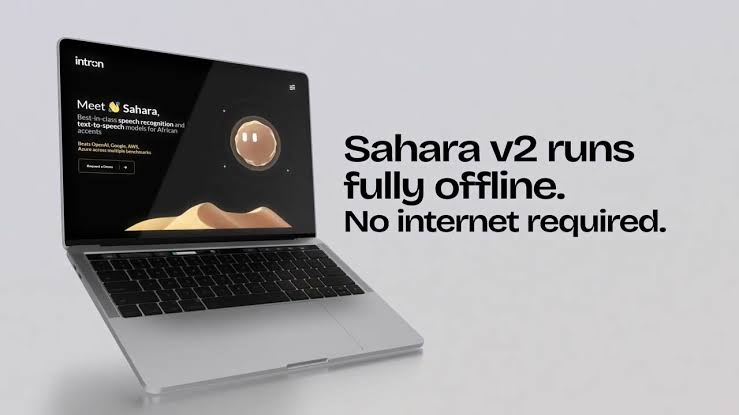
Sahara v2, launched in March 2026, covers 24 African languages and was trained on more than 14 million clips, roughly 50,000 hours from over 40,000 African speakers. On benchmarks for African names and accents it beats leading global models. That matters: getting Adebayo, Nyambura or Oluwaseun right is not a nicety in health records or banking. Intron also published its first Africa Voice AI Report. This is infrastructure, so expect a sales conversation, not a signup page.
3. Spitch AI: The Plumbing
Founder Temi Babs started the Lagos company after deciding OpenAI Whisper wasn't well tuned to African voices. Instead of a consumer app, Spitch built simple APIs for Yoruba, Hausa, Igbo, Amharic and English speech in both directions. Its models now sit inside the Cencori AI gateway, so a team can transcribe a Yoruba WhatsApp voice note and reply in a natural Yoruba voice within one workflow.
4. Microsoft Azure: Boring, Deliberately
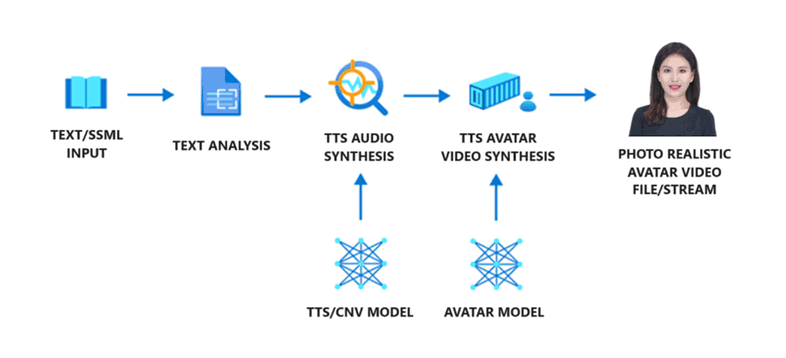
Azure keeps winning procurement. It has dedicated English locales for Nigeria, Kenya, South Africa and Tanzania, with Nigerian voices Abeo and Ezinne turning up across third-party tools, plus Custom Neural Voice for branded builds. Two voices per locale is thin, and the reads are competent rather than characterful. Bad news for a Nollywood audio drama. Exactly right for a bank rebuilding its phone system across Lagos and Nairobi.
5. HeyGen: Voice, Face and Captions Together
More than 300 voices across 175+ languages and dialects, with line-level control over stress and pauses, all in the same workspace as presenter video and translation. HeyGen is also candid that the most authentic African accent is a real one, and points users toward cloning a consented speaker. Its G2 recognition speaks to workflow polish more than accent fidelity, but for weekly video teams, polish decides it.
6. CAMB.AI: Built for Broadcast
Its MARS models preserve emotion across 150+ languages, which explains a client list running from IMAX to NASCAR and FanCode cricket. A Nigerian sports property or Kenyan documentary could be localised without losing a familiar presenter voice. African language depth trails Intron and Spitch, so treat it as a distribution tool.
7. Awarri and N-ATLAS: A Nation's Bet
Built with Nigeria's Federal Ministry of Communications, Innovation and Digital Economy, N-ATLAS is an open-source model covering Yoruba, Hausa, Igbo and Pidgin, plus recognition for Nigerian-accented English. The GSMA and five African governments have since launched ATLAS Umoja to scale the approach, with Awarri as a technical partner. Don't expect polished tooling yet. Expect foundations.
8. Lelapa AI: The South African Specialist
Founded in Johannesburg in 2022, Lelapa offers transcription, synthesis, translation and sentiment analysis tuned to local languages. Its seed round was a modest $2.5 million, but backers include Jeff Dean and Mozilla Ventures. When the accent question is really a South African one, especially in customer service, start here.
9. Narakeet: The Workhorse
Around 900 voices, Nigerian and African English among them, turning slide decks and scripts into narrated video cheaply. It won't beat ElevenLabs on fidelity. It will let a small education publisher produce a hundred lessons in a week, which is often the more urgent problem.
10. Easy-Peasy.AI: Character Over Polish
Young Igbo voices for pidgin folktales, poised Yoruba-accented narrators, warm Lagos reads for conversational AI: these contributed voices have real texture. The free tier suits indie storytellers. Check licensing and consent before commercial release.
So Which One?
For expressive narration, ElevenLabs. For accuracy at scale, Intron. For developers, Spitch. For compliance, Azure. The rest fill specific gaps well. The bigger story is that African English is no longer an afterthought. Got a favourite accent? Make your case in our vote on the most interesting accents in the world.