Quick Verdict
LinkedIn is the platform that almost every professional feels compelled to use because not having a profile can feel like professional invisibility. That compelled necessity, more than genuine enthusiasm, is what keeps most people on it. The gap between what LinkedIn promises, an essential hub for professional growth, jobs, and networking, and what it delivers in 2026 is wide enough to make this review necessary. The job listings are overrun with ghost jobs, listings for positions that were filled internally months ago or are kept active to collect resumes for a future pipeline rather than an actual opening. Applications disappear into algorithmic silence. The feed has drifted from professional networking content into a Facebook-style attention competition where performative posts about personal struggles outperform substantive industry insight. The connection request has become professional spam. Premium pricing is steep and delivers questionable returns for most users. Customer service, when something genuinely goes wrong with an account, is documented across Trustpilot as being effectively unreachable and AI-automated to the point of uselessness. The Trustpilot rating of 1.5 out of 5 reflects what happens when a platform reaches monopoly status in its category and stops innovating in ways that actually benefit users. LinkedIn is necessary. That is not the same thing as being good. We rate LinkedIn 1.5 out of 5 for 2026.
At a Glance: Icon Polls Ratings
Here is how LinkedIn scored across the areas we evaluated in our 2026 research:
|
Category |
Stars |
Score |
|
Professional Network Reach |
★★★★☆ |
3.5/5 |
|
Job Listings and Search Quality |
★★☆☆☆ |
2/5 |
|
App and Platform Design |
★★★☆☆ |
2.5/5 |
|
Feed Quality and Content |
★★☆☆☆ |
1.5/5 |
|
Premium Value for Money |
★★☆☆☆ |
1.5/5 |
|
Account Security and Management |
★★☆☆☆ |
2/5 |
|
Customer Service |
★☆☆☆☆ |
1/5 |
|
Overall |
★★☆☆☆ |
1.5/5 |
What Is LinkedIn?
LinkedIn is a professional networking platform founded in 2002 by Reid Hoffman, Jeff Weiner, and co-founders, and launched publicly in 2003. Microsoft acquired it in 2016 for $26.2 billion, which at the time was Microsoft's largest acquisition. The platform operates as both a social network and a job marketplace, connecting over one billion users across more than 200 countries. It is the dominant platform for professional identity on the internet, functioning as an always-on digital resume, a recruiter database, a company research tool, a job board, and in theory, a professional content network.
The scale is what makes LinkedIn both indispensable and exhausting. No other platform has anything close to its depth of professional profile data. Recruiters source candidates through LinkedIn more than any other single channel. Companies post jobs there as a matter of course. Professionals are expected to maintain a LinkedIn presence the way they are expected to maintain a resume. The platform knows this and has not always used that necessity to drive meaningful improvement.
LinkedIn has operated under Microsoft's ownership for nearly a decade, and the product direction reflects that relationship in ways that are both positive (better AI-assisted profile suggestions and job matching) and frustrating (aggressive upselling toward premium tiers, an increasingly bloated feature set that serves advertising revenue more than user needs, and a customer support infrastructure that responds to millions of users with the resources appropriate for a fraction of that volume).
In 2026, LinkedIn is what it has always been at its core: the place professionals go because they have no better alternative. The question this review addresses is whether the experience of using it reflects a platform that respects that necessity or exploits it.
The LinkedIn App: Download, Design, and Daily Use
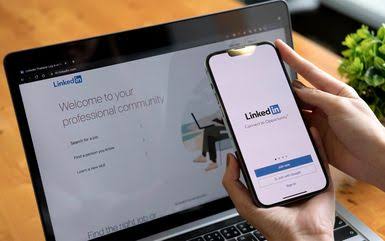
LinkedIn is available as a free download from the Apple App Store and Google Play Store. The desktop experience at linkedin.com remains the more complete interface for power users, particularly for recruiters, job searchers doing detailed research, and anyone managing a company page. The mobile app covers the core functions: viewing and posting updates, job searching, messaging connections, and checking notifications, in a streamlined format.
The app design has been through multiple iterations and the current version is functionally competent. Navigation between home, jobs, network, messaging, and notifications is clear. Profile editing works well on mobile. The job search filter set is comprehensive, covering location, experience level, job type, industry, company size, and remote or on-site preference. The search function for people and companies is reliable.
Where the app's design actively works against users is in the algorithmic push toward engagement over utility. The notification system is aggressive and surfaces low-value updates: alerts that a connection liked someone else's post, job viewing count updates designed to create anxiety, weekly profile view summaries framed to push Premium upgrades. The home feed requires active curation to be useful. Out of the box it mixes relevant industry content with viral emotional posts, sponsored content that is not always clearly labeled as such, and reshared content that can appear multiple times from different connections.
The notification settings allow some degree of control but not enough to genuinely quiet the platform's attention-seeking behavior. Multiple reviewers on Product Hunt and Trustpilot describe LinkedIn as feeling like a chore rather than a useful professional tool in their daily experience, and the app design choices that prioritize platform engagement over user value are the primary reason for that characterization.
The Desktop vs Mobile Gap
Job searching on desktop remains meaningfully better than on mobile for serious job hunters. The desktop interface allows more complex filter combinations, easier side-by-side company research, and better readability of long job descriptions. The mobile app's job application flow has improved but still feels constrained compared to a desktop session. For casual use, checking messages and keeping a profile updated, mobile is adequate. For active job searching or serious networking campaigns, desktop is the more effective environment.
Sign Up and Sign In: Getting Into Your Account
Signing up for LinkedIn is free and takes a few minutes. You provide your name, email address, and a password. LinkedIn then walks you through a profile setup flow that asks for your current role, industry, and career goals. The sign-up experience is smooth for first-time accounts. Google authentication is also available.
The sign-in experience for established users is standard when it works. Email and password, with two-step verification available and strongly recommended. LinkedIn's sign-in problems emerge in specific circumstances that are well documented in 2026 consumer reviews, and they tend to be severe.
Account lockouts after LinkedIn's security system flags activity can trap users in a loop where the platform sends a verification code to a phone number or email address that the user no longer has access to, with no recovery path available through the interface. One ConsumerAffairs reviewer from February 2026 describes being locked in a constant loop of trying to log in with a password and a text to verify, which took them to an error message with no way to reach a human for help. Another describes creating a new account after their original account was hacked and reporting it multiple times with absolutely no response, then having the new account locked within minutes of creation.
The identity verification loop, where LinkedIn's anti-fraud system requires verification steps that the locked user cannot complete, is one of the most documented and consistently unresolved failure modes on the platform. For users who have maintained a LinkedIn presence for years, being locked out of that account and having no functional path to recovery represents a real professional loss. Your network, your recommendations, your posted content, your message history, all of it becomes inaccessible with no customer service capable of intervening.
Company page access has a parallel problem. One Trustpilot reviewer describes their company LinkedIn page becoming inaccessible, going through a cycle of identity verification that resolved nothing, and contacting LinkedIn through their personal account only to receive no meaningful help. For businesses that use LinkedIn as a primary marketing and recruitment channel, losing access to a company page is a significant operational disruption with no reliable resolution pathway.
Jobs on LinkedIn: The Ghost Job Problem
LinkedIn's job marketplace is simultaneously the platform's most compelling feature and its most documented failure. The claim of millions of job listings is real. The quality and integrity of those listings is the problem.
Ghost jobs are the most widely discussed issue in LinkedIn's job search experience in 2026. A ghost job is a listing for a position that is no longer available, was filled internally, was never real, or is being kept active to collect applications for a future pipeline rather than an immediate opening. The scale of this problem on LinkedIn is significant. Multiple independent analysis sources and community discussions from 2026 estimate that a meaningful proportion of job listings on the platform are not actively hiring for the posted role.
The consequence for job seekers is documented in consistent detail: spending 45 minutes tailoring a resume and cover letter for a job that 749 other people have already applied to, submitting the application, and receiving no response at all. Not a rejection. Not an automated acknowledgment. Nothing. Hiring managers acknowledge in documented community discussions that they cannot review that many applications. Automated screening tools filter most applicants before a human sees anything. And many of the listings generating hundreds of applications were never going to hire from the pool at all.
One Capterra reviewer describes applying to nearly hundreds of jobs through LinkedIn with none ever receiving a reply. This experience is not an outlier. It is the majority experience of active job seekers on the platform in 2026. The combination of ghost listings and applicant volume makes LinkedIn's Easy Apply feature, which allows one-click applications, a mechanism that generates enormous application counts for individual listings while making those applications individually worth less than they would be on platforms with more friction and fewer competing applicants.
LinkedIn's filtering system allows job seekers to narrow searches by remote status, experience level, date posted, and other parameters. But the filtering cannot identify ghost listings, cannot distinguish between listings with genuine immediate openings and those maintained for future pipeline building, and cannot surface whether a listing has already had an internal candidate identified. The date posted filter helps somewhat, with recently posted listings being more likely to be active, but it is imperfect.
For job seekers who find LinkedIn valuable, the most consistent advice from career professionals is to use LinkedIn for the network and recruiter relationships rather than the application queue. Positions filled through direct recruiter outreach, referrals from connections, and direct messages to hiring managers have meaningfully higher success rates than applications submitted through the standard job listing queue. This is accurate advice. It is also an indictment of the job listing feature as a primary job search mechanism.
Recruiter Experience: A Different Story
The recruiter perspective on LinkedIn is more positive than the job seeker perspective, and this asymmetry is worth naming explicitly. LinkedIn's Recruiter platform gives hiring professionals access to the most extensive professional database available. The search and filter capabilities for finding candidates with specific skills, industries, and experience are unmatched. Companies post on LinkedIn as a matter of course because the visibility and candidate pool are larger than any competing platform. For recruiters, LinkedIn works. For job seekers applying through the resulting listings, the experience is substantially worse.
Premium Subscriptions: What You Pay and What You Actually Get
LinkedIn Premium comes in multiple tiers, and the pricing has climbed to a point where the value proposition requires honest scrutiny. Here is the current subscription structure:
|
Plan |
Monthly Price |
Key Features |
|
Premium Career |
$39.99/month |
InMail credits to message recruiters. Who viewed your profile (full list). Job insights and salary comparisons. LinkedIn Learning access. AI writing assistance. |
|
Premium Business |
$59.99/month |
Everything in Career plus unlimited people browsing, business insights, and 15 InMail credits. |
|
Sales Navigator |
$99.99/month |
Advanced lead and company search, CRM integration, lead recommendations. Designed for sales professionals. |
|
Recruiter Lite |
$169.99/month |
30 InMail credits, advanced candidate search, pipeline management. Designed for individual recruiters. |
Annual billing saves approximately 20-33% vs monthly rates. LinkedIn offers a 1-month free trial for Premium Career and Business plans. Prices listed are for individual subscriptions in the US, April 2026. LinkedIn Learning is also available separately.
Is LinkedIn Premium Worth It?
The honest answer for most users is no, not at these prices. Premium Career at $39.99 per month is marketed primarily on the who viewed your profile feature and InMail credits. The who viewed your profile data is satisfying to look at but rarely translates into actionable career outcomes for most users. InMail credits are only valuable if the recruiters you are messaging are responsive, and many are not. LinkedIn Learning is included, which has genuine value as a skill development platform, but it is available as a separate subscription at a lower price if that is the primary use case.
The most documented complaint about LinkedIn Premium is that it does not meaningfully improve job search outcomes for the average user. Applications submitted through Premium accounts are not systematically reviewed before free account applications. The profile boost features are incremental. The job insights show salary ranges and application statistics that are useful for context but do not change the fundamental math of the job search process.
Trustpilot reviews specifically call out the premium subscription as a significant pain point. Users describe being charged unexpectedly after free trials, difficulty cancelling subscriptions, and premium features that do not deliver the outcomes implied by the marketing. One Trustpilot reviewer describes a free trial converting to a paid subscription they did not intend and encountering difficulty getting a refund through customer service.
For recruiters and sales professionals, the higher-tier products (Sales Navigator and Recruiter Lite) do deliver professional-grade functionality that justifies the price for people using them as core work tools. The value argument is much weaker for individuals using Premium Career or Premium Business for personal professional development or job searching.
The Feed: LinkedIn's Identity Crisis
The LinkedIn home feed is where the platform's fundamental tension between being a professional network and being a social media engagement machine plays out most visibly. In 2026, the feed is a genuinely confusing mix of content types that often has little relationship to professional development or industry insight.
The content that tends to perform best algorithmically on LinkedIn in 2026 is personal disclosure: posts about professional struggles, vulnerable career stories, emotional workplace experiences, and content designed to generate empathetic reaction. This type of content generates high engagement metrics. The algorithm rewards high engagement. The result is a feed that surfaces emotional performance more reliably than technical insight, industry analysis, or genuinely useful professional knowledge.
A Reddit post that circulated in professional communities in 2026 described LinkedIn as having come a long way from trash can on desktop to trash can of job searches. This captures a real sentiment: the platform that was once awkward but honest about its purpose has drifted into something more aspirational in its marketing and more chaotic in its actual content experience.
The connection request spam problem has also grown. In 2026, connection requests frequently arrive from people with no obvious professional relevance, followed immediately by a sales pitch after the connection is accepted. LinkedIn's messaging system has become a channel for cold outreach that many users describe as indistinguishable from email spam. The platform's network effect, which gives every accepted connection access to your professional identity and communication channel, makes accepting unknown connections a meaningful privacy and attention trade-off.
Content discovery is hampered by a feed algorithm that does not reliably surface content from the specific connections a user values most. Toggling to view content from specific people requires deliberate navigation. The default feed mixes paid content, viral posts, and network activity in ways that obscure the signal of what a particular user's professional community is actually thinking and discussing.
Account Management and Customer Service: LinkedIn's Most Documented Failure
If you use LinkedIn without ever having an account problem, the platform's customer service infrastructure is invisible to you. If you have an account issue, you discover that this infrastructure is largely non-existent in any meaningful sense for individual users.
LinkedIn's Trustpilot rating of 1.5 out of 5, drawn from thousands of reviews, is almost entirely driven by customer service and account management failures. The pattern documented across ConsumerAffairs, Trustpilot, and Product Hunt is consistent and damning: account restrictions and bans are applied algorithmically without human review, appeals are processed by automated systems that generate generic responses pointing to policy pages without addressing specific situations, and there is no functional path to reach a human with authority to investigate and resolve the issue.
One ConsumerAffairs reviewer with fifteen years of LinkedIn history describes having their account restricted, reaching out to appeal, receiving only automated responses listing possible violations without identifying the specific one, and finding no path to human review or meaningful resolution. After fifteen years of activity, the account suspension was handled entirely by automation with no empathy or due process. The reviewer specifically describes the experience of being unable to talk to anyone, unable to understand what they had done, and unable to get any review of their specific circumstances.
Account hacking is a documented and recurring problem, and LinkedIn's response to compromised accounts is equally documented as inadequate. One ConsumerAffairs reviewer from February 2026 describes their account being hacked, reporting it multiple times with no response, creating a new account, and then being locked out of the new account within minutes. The circular nature of this failure, where the platform's security system locks out the legitimate user trying to recover from a hack, while the support system provides no path to resolution, represents a failure of basic platform responsibility.
Businesses managing company pages face similar issues. Company pages that become inaccessible through LinkedIn's identity verification cycles have no clear emergency support pathway. For businesses that have invested in building a LinkedIn presence and use the company page as a primary professional communication channel, this vulnerability is a serious operational risk with no mitigation that the platform makes available.
The Trustpilot reviews frequently note the AI-automated nature of the support responses. One reviewer describes receiving what is clearly an automated reply that failed to address their specific situation and left their issue completely unresolved. The scale of LinkedIn as a platform, one billion users, has not been met with customer service infrastructure scaled to handle that volume at any standard of responsiveness. What passes for support is a combination of help center documentation and automated ticket systems that resolve without resolution.
Privacy, Data, and Security Concerns
LinkedIn has a documented history of security incidents, including data breaches that exposed user information. The platform collects extensive personal and professional data: your career history, your connections, your job search activity, your message content, your content engagement patterns, and your device information. Under Microsoft's ownership, this data connects to a broader ecosystem of Microsoft products.
The data collection practices are disclosed in LinkedIn's privacy policy but not always in ways that are easily digestible for average users. LinkedIn's use of member data for AI training, targeted advertising, and recruiter products means that the detailed professional profile you build to represent yourself also functions as a commercial data asset for the platform.
One Trustpilot reviewer describes discovering that LinkedIn had accessed and used their Gmail account without explicit authorization, characterizing this as potentially illegal. While the specific circumstances of that case are not independently verified, the concern about LinkedIn's scope of data collection is consistent with documentation in independent privacy analyses.
Product Hunt reviewers describe LinkedIn as acting as a large data collector and express concerns about trusting the platform with their professional information. This sentiment reflects a broader awareness among users that the price of LinkedIn's free tier is data about who you are, who you know, and what opportunities you are seeking, data that is extremely valuable in aggregate and that LinkedIn monetizes through recruiter and advertising products.
Two-factor authentication is available and strongly recommended for all LinkedIn accounts given the platform's history of security incidents and the documented cases of account hacking. Using a unique password for LinkedIn that is not reused on other platforms is equally important. These are basic security practices, but they are particularly relevant for a platform that holds detailed professional identity information and has been a target for credential theft.
Pros and Cons
What LinkedIn Still Does Well
The professional network database is unmatched in scale. Over one billion profiles across more than 200 countries means that for finding a specific person in a professional context, LinkedIn has no competitor
Recruiter-driven job discovery, where recruiters actively find and message candidates, remains genuinely effective when your profile is optimized and current with relevant skills and titles
Company research capabilities allow job seekers and sales professionals to understand organizational structure, growth, recent hires, and culture signals from a single platform
Professional credibility and verification: a LinkedIn profile is a broadly accepted professional signal, and recommendations from genuine connections carry weight in many hiring contexts
LinkedIn Learning, which is included with Premium plans or available separately, provides a legitimate catalog of professional skill courses at competitive quality relative to the subscription price
Direct messaging with specific connections and recruiters, when it works through genuine relationship context rather than spam, can produce career outcomes that other platforms cannot replicate
What Makes LinkedIn Frustrating and Unreliable
Ghost job listings for positions that are not actively hiring inflate listing counts and consume job seekers' time on applications that will never receive a response, with no platform mechanism to identify or filter them
The home feed has drifted from professional content to a social media engagement competition where emotional performance consistently outranks substantive industry insight in the algorithm
Connection requests have become professional spam, with many connections immediately followed by sales pitches, degrading the meaning and value of the connection relationship
Customer service is effectively non-existent for individual users: automated systems handle account restrictions and bans with no reliable path to human review for legitimate appeals
Account lockout loops with no human recovery pathway put years of professional history and network access at risk with no functional mitigation from the platform
Premium pricing at $39.99 to $169.99 per month is steep and does not deliver documented improvements in job search outcomes for most individual users
The platform's data collection and monetization practices treat user professional identity as a commercial asset, with implications that users are often not fully aware of during the profile building process
The Trustpilot rating of 1.5 out of 5 reflects a platform that has reached monopoly status in its category and has not built the customer service infrastructure proportionate to that scale
Spam and fake profiles proliferate on the platform, degrading the quality of connection requests, job postings, and general networking activity
The AI-automated support responses described in multiple reviews as clearly generic and unresponsive to specific situations represent a failure of basic platform responsibility for users with legitimate problems
Alternatives Worth Knowing
Indeed: The largest job board by listing volume and typically the best-maintained for active, genuine openings. Indeed has stronger spam filtering on job listings than LinkedIn and a better free application experience. It lacks LinkedIn's network and profile features but outperforms it as a pure job search platform.
Glassdoor: Best for company research, salary benchmarking, and understanding workplace culture before applying. Glassdoor's interview reviews and anonymous employee feedback complement LinkedIn profile research. Many professionals use both platforms for different purposes.
Wellfound (formerly AngelList Talent): The strongest alternative for startup and technology job searching. Listings are more consistently genuine than LinkedIn's, and the startup-focused community is more tightly defined. Salary transparency is built in, which LinkedIn only partially delivers through premium features.
Twitter / X and Bluesky: Industry communities on social platforms, particularly in technology, media, and creative fields, increasingly generate professional opportunities through authentic conversation rather than formal applications. Many professionals report better career opportunities emerging from Twitter or Bluesky engagement than from LinkedIn applications.
Frequently Asked Questions About LinkedIn (2026)

1. Is LinkedIn free to use in 2026?
Yes, LinkedIn is free to use at the basic level and creating an account costs nothing. The free tier allows you to create a full profile, connect with other users, search and apply for jobs, view limited profile view data (who viewed you in the past 90 days, but not the full list), send direct messages to connections, and view and post in the feed. The free plan does not include InMail credits to message non-connections, the full list of who viewed your profile, detailed job insights, LinkedIn Learning access, or the premium profile visibility that LinkedIn markets to job seekers. LinkedIn Premium tiers start at $39.99 per month and go up to $169.99 per month for recruiter products. A one-month free trial of Premium Career or Business is available. For most casual users and professionals maintaining a presence without actively job searching, the free tier is sufficient. For active job seekers or recruiters, the premium features have their use case but the value relative to the price is genuinely debatable for individuals.
2. How do I sign up for LinkedIn?
Sign up for LinkedIn at linkedin.com or through the LinkedIn app on iOS or Android. Click Join Now on the homepage and enter your first name, last name, and email address, then create a password. LinkedIn will ask you to verify your email address through a code sent to that address. After verification, you complete a profile setup flow where you enter your current role, industry, most recent employer or school, and professional goals. LinkedIn uses this information to populate initial job recommendations and connection suggestions. The entire sign-up process takes approximately five minutes for the basic setup, though building a complete and effective profile takes considerably longer. Your profile serves as both your professional identity on the platform and your searchability by recruiters, so investing time in a well-optimized profile with relevant keywords, a professional photo, and a clear headline is worthwhile. After sign-up, enabling two-factor authentication in your account settings immediately is strongly recommended.
3. How do I sign in to LinkedIn?
Sign in to LinkedIn at linkedin.com by clicking the Sign In button and entering your email address and password. Google authentication is also available if you connected your Google account during signup. The LinkedIn app on iOS and Android uses the same credentials. If you have forgotten your password, the Forgot Password link on the sign-in page sends a reset link to your registered email address. If you have lost access to your registered email address and are also locked out of the account, LinkedIn's recovery options are limited and the process for regaining access through identity verification can be lengthy and frustrating based on documented user experiences. Two-factor authentication, where the platform sends a code to your phone before signing in, is available in account settings and is recommended given the platform's documented history of account compromise. If you are in a sign-in loop where the verification code does not work or the process returns an error, the help center at linkedin.com/help is the starting point, though documented user experiences suggest human support in these cases is difficult to reach.
4. How does LinkedIn's job search work and are the listings real?
LinkedIn's job search is accessed through the Jobs tab and allows filtering by location, job type, experience level, industry, company size, and remote or on-site status. The Easy Apply feature lets you apply to eligible listings with your LinkedIn profile information in minutes. LinkedIn also surfaces job recommendations based on your profile and activity, and recruiters actively search candidate profiles to reach out directly. Regarding whether listings are real: many are and many are not. Ghost jobs, listings for positions that are no longer available or were never intended to hire from the applicant pool, are a documented and persistent problem on the platform. Companies keep listings active to collect resumes for future pipeline building, to signal growth to the market, or because the administrative process for removing filled listings is lower priority than filling the next open role. Career professionals consistently advise that applying through job listings is the least effective LinkedIn strategy and that being found by recruiters through an optimized profile, maintaining active engagement with relevant communities, and using connections for referrals produces substantially better outcomes than submitting applications to the general queue.
5. What is LinkedIn Premium and is it worth paying for?
LinkedIn Premium is the paid subscription service that unlocks additional features beyond the free tier. There are four tiers: Premium Career at $39.99 per month, Premium Business at $59.99 per month, Sales Navigator at $99.99 per month, and Recruiter Lite at $169.99 per month. A one-month free trial is available for Career and Business. Premium Career's main selling points are the full who viewed your profile list, InMail credits to message recruiters without a prior connection, job insights including applicant statistics and salary ranges, and LinkedIn Learning access. Whether it is worth paying for depends heavily on your use case and situation. For active job seekers, the InMail and visibility features can accelerate recruiter relationships in some industries. For most casual users who are not actively searching, the value is limited and the monthly cost is significant. For recruiters and sales professionals using Recruiter Lite or Sales Navigator as core work tools, the professional-grade features justify the price. The premium subscription has been cited in Trustpilot reviews for unclear billing during free trials and difficulty canceling, so reading the trial conversion terms carefully before signing up is advisable.
6. How do I download the LinkedIn app?
Download the LinkedIn app for free from the Apple App Store for iPhone and iPad, or from Google Play for Android devices. Search for LinkedIn and install the official app published by LinkedIn Corporation. The app is free to download and the free tier features are available without any payment. The desktop experience at linkedin.com remains the more complete interface for power users, especially for job searching with complex filter combinations, detailed company research, and managing long message threads. The mobile app is well-suited for checking notifications, quick status updates, reviewing job alerts, and responding to messages. All LinkedIn features, both free and premium, are available through the app based on your account subscription level. Logging in to the app uses the same email address and password as the desktop site. Two-step verification, if enabled on your account, will be required on new device logins.
7. Why was my LinkedIn account restricted or banned?
LinkedIn restricts or bans accounts for several categories of behavior: sending too many connection requests that are declined or marked as spam, posting content that violates the professional community policies, activity that LinkedIn's algorithms flag as inauthentic (such as patterns that resemble bot behavior), using the platform for what LinkedIn characterizes as inappropriate commercial activity, and security checks triggered by unusual login patterns. The frustrating reality documented across thousands of reviews is that the restriction system is heavily automated and the appeals process is similarly automated, with little to no human review for individual cases. If your account has been restricted, the appeal process starts at the notification you received about the restriction or through the Help Center at linkedin.com/help. Documented user experiences suggest that generic appeals citing the relevant policy receive automated rejections, while specific, detailed appeals that address the exact nature of the account's behavior in relation to the specific policy cited have a marginally higher success rate. Account restrictions with no specific violation identified, which are documented in multiple reviews including those from long-term users with over a decade of platform history, are the most difficult to appeal because there is no specific behavior to address in the appeal.
8. How do I delete or deactivate my LinkedIn account?
To close your LinkedIn account, go to your account settings by clicking on your profile photo in the top right corner of the desktop site and selecting Settings and Privacy. Under the Account Preferences section, find the Account Management option and select Close Account. LinkedIn will ask you to select a reason for closing and may present retention offers before confirming the closure. Your profile and data are removed from LinkedIn's public-facing systems after the account is closed, though LinkedIn's data retention policies specify that some data may be retained for a defined period for legal and business purposes as described in the privacy policy. If you want to deactivate rather than close, LinkedIn does not offer a traditional deactivation option that hides your profile while preserving your account. The closest option is to turn off your public profile visibility in privacy settings, which removes your profile from search engine results and external viewing while keeping your account active. One ConsumerAffairs reviewer from April 2026 describes encountering difficulty having their account properly closed despite formally invoking their right to deletion, and the review documents opening a formal case. If you are in the EU or another jurisdiction with strong data deletion rights under GDPR or equivalent legislation, LinkedIn is legally obligated to honor verified deletion requests.
9. How do I contact LinkedIn customer service?
Contacting LinkedIn customer service is one of the most frustrating documented experiences across the platform's review record. There is no general public phone number for LinkedIn support. Support is accessed through the Help Center at linkedin.com/help, where you can search for help articles or submit a support request through a web form. The in-app Help option follows the same routing. LinkedIn's Premium subscribers can access support through a dedicated channel that provides faster response times than free account support. For company pages and business products, there are dedicated support contacts through the advertising and marketing solutions portals. In practice, based on documented user experiences across Trustpilot and ConsumerAffairs, support requests from individual free account users are handled primarily by automated systems that generate responses based on the category of the request. Reaching a human agent requires navigating through automated responses and escalating repeatedly, and even then the agent may have limited authority to resolve account-level decisions. For account restriction appeals specifically, there is no phone number or live chat option, and the review process is automated enough that multiple reviewers describe receiving responses that clearly have not engaged with the specific details of their situation.
10. Is LinkedIn still worth using in 2026?
The honest answer is that LinkedIn is worth maintaining a presence on and not worth trusting as your primary career or networking strategy. Not having a LinkedIn profile in 2026 creates genuine professional visibility problems: recruiters source from it, hiring managers check it, and it is the default platform for professional credibility signals in most industries. That reality makes it worth having a complete, current profile with relevant keywords, appropriate skills, and a professional photo. What LinkedIn is not worth in 2026 is treating as a reliable job search platform where submitting applications through the general queue produces consistent outcomes, paying for Premium features without a specific professional use case that the premium features directly address, or building a professional communication strategy entirely around a platform where your account can be restricted by automation with no reliable recovery pathway. Use LinkedIn as one part of a professional strategy that includes direct applications to company career pages, active engagement in specific communities where your industry gathers, and direct relationship building with recruiters through authentic professional interaction rather than platform-mediated applications to an overwhelmed queue.
Icon polls Verdict
LinkedIn earns a 1.5 out of 5 from Icon Polls in 2026. This is not a rating about LinkedIn's relevance. It is still the most important professional platform in existence, and not being on it carries real professional costs. The rating is about what the platform actually delivers for the people who are on it, and on that measure the gap between promise and delivery is large.
The job marketplace is undermined by ghost listings that consume job seekers' time and energy with no corresponding outcome. The feed has drifted from professional utility toward social media engagement optimization. The connection system has been degraded by spam to the point where connection requests are treated with suspicion rather than professional openness. Premium pricing is steep and under-delivers for most individual users. And the customer service infrastructure, when something genuinely goes wrong with an account, is so inadequate that it generates the platform's 1.5-star Trustpilot rating almost entirely on its own.
LinkedIn functions. That is different from LinkedIn working well. It works well for recruiters who use it as a professional database. It works well for companies whose job listings and company pages are maintained and responsive. It works, sometimes, for job seekers who are found by recruiters rather than applying through the queue. For the majority of its one billion users, using LinkedIn is an exercise in maintaining professional presence on a platform that has reached monopoly status and has used that status to prioritize advertising revenue and engagement metrics over the user experience that justified its dominance in the first place.
Maintain your profile. Keep it current. Enable two-factor authentication today. And build your actual career strategy on direct relationships, industry communities, and targeted outreach rather than on an application queue that disappears into algorithmic silence.